

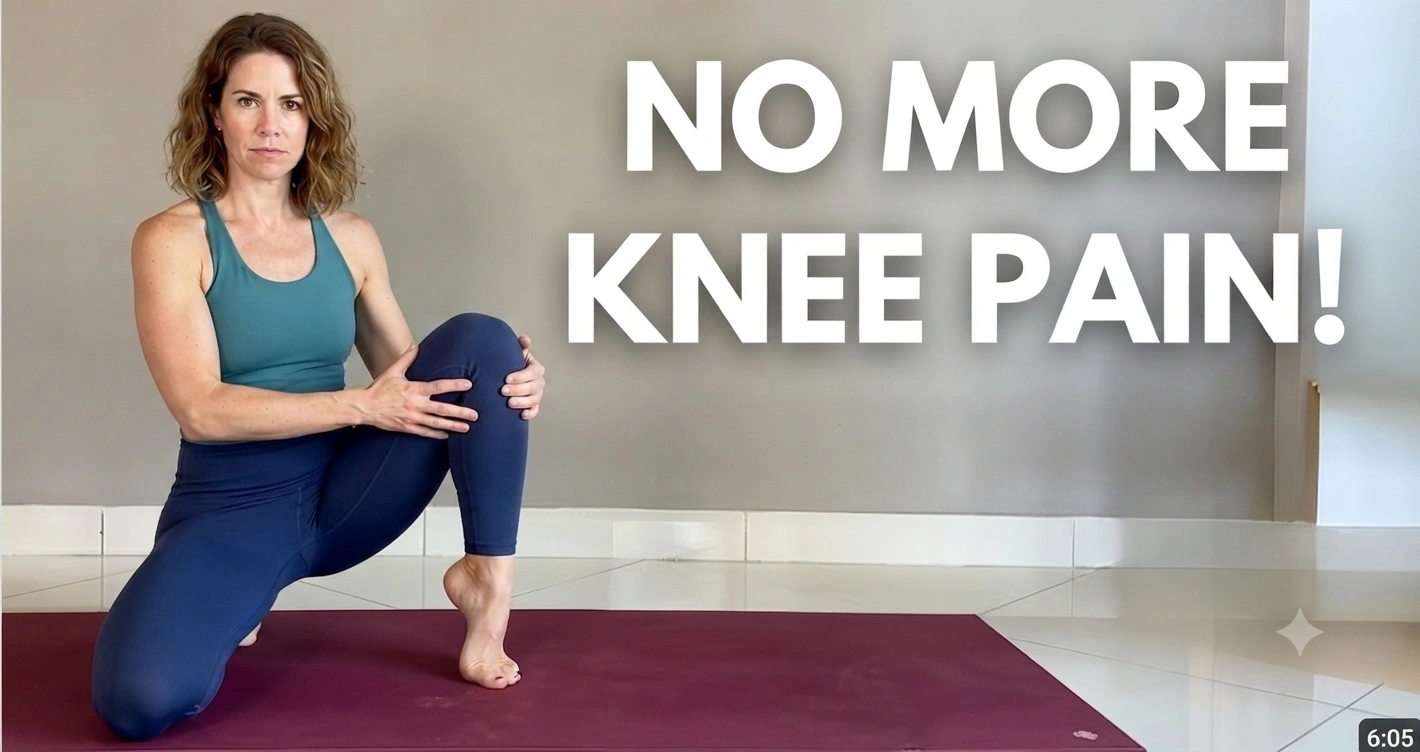
Are you tired of starting a home fitness routine only to quit a week later because of nagging knee or joint pain? You are not alone.
If you are looking to start a low-impact home workout, you have come to the right place. Many beginners struggle with knee pain, but with the right guidance, it is possible to transform your fitness journey from painful to empowering. According to the American College of Sports Medicine, low-impact activities are highly recommended for joint longevity.
My Personal Journey: From “Injury” to Sustainable Fitness
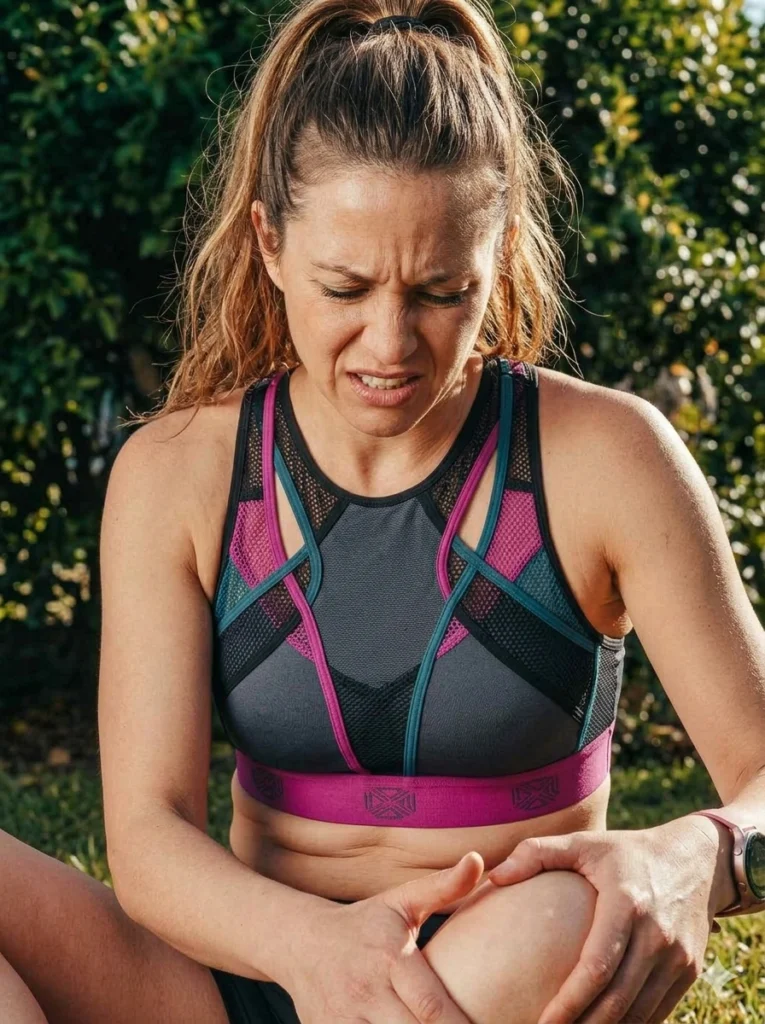
I used to be overweight, and in my desperation to get in shape, I tried everything—running, jump rope, and stair climbing. These high-impact exercises were devastating for my joints, and I soon found myself struggling with persistent knee pain. I tried swimming, but the logistics of finding a heated pool, the time-consuming hair washing, and carrying wet clothes made it impossible to maintain consistently. Even when I went to the gym, the lack of professional guidance led me to use machines incorrectly, resulting in shoulder and lower back pain.
I learned the hard way that home fitness shouldn’t be about “pushing through the pain.” It should be about choosing the right equipment and methods to build a sustainable, pain-free lifestyle. This is why I now advocate for a low-impact home workout that is beginner-friendly and joint-conscious.
Why Your Mat Could Be a “Knee Assassin”
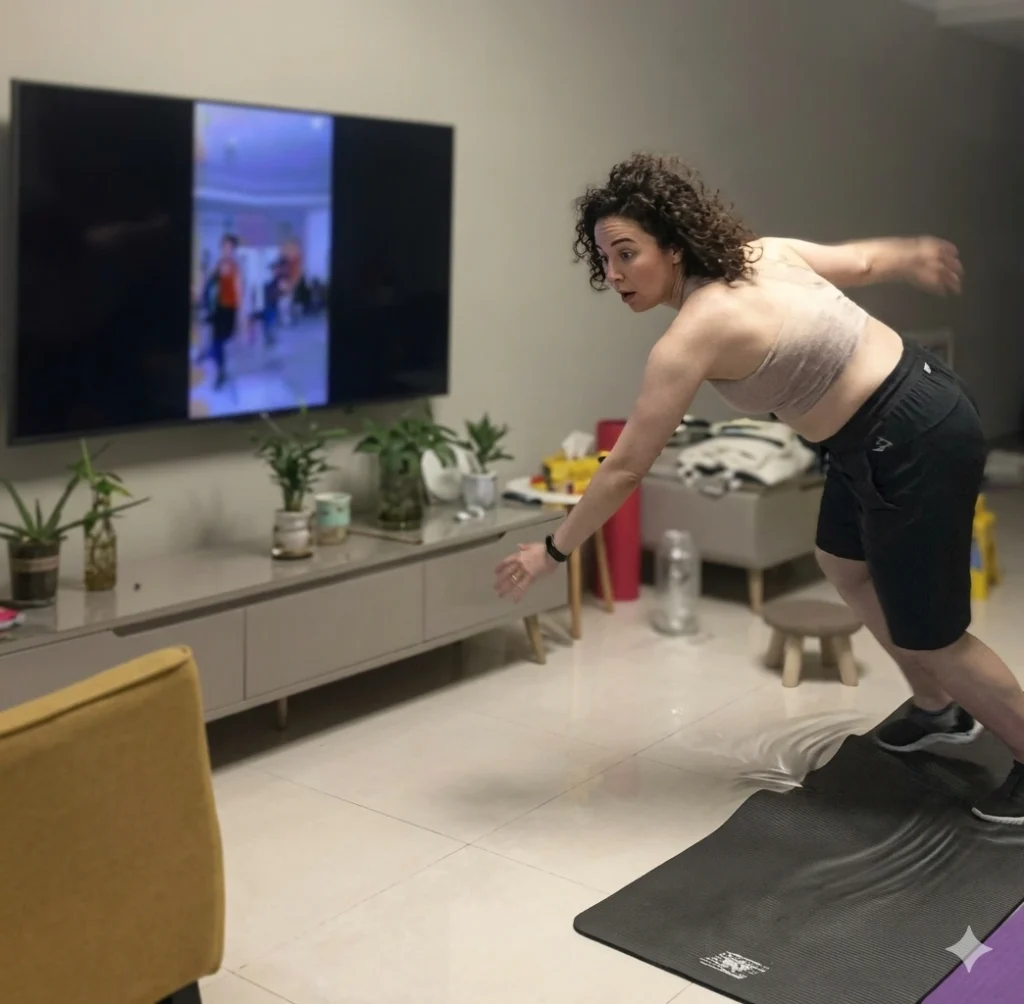
During my fitness journey, I realized that many mats aren’t just uncomfortable—they are safety hazards.
- The Slippage Danger: If your mat lacks proper grip, moves like mountain climbers or jumping jacks can cause the mat to slide, leading to slips, sprained ankles, or even meniscus tears.
- The “Marshmallow” Trap: Thick, ultra-soft mats create an unstable surface that forces your lower limb muscles to constantly compensate to maintain balance. This leads to excessive muscle fatigue and increases the risk of joint during jumps or turns.
- The “Bottoming Out” Risk: Thin, low-density mats fail to provide cushioning. During kneeling or high-impact moves, your kneecaps (patella) strike the hard floor directly, which can lead to Patellofemoral Pain Syndrome (PFPS), also known as “runner’s knee”.
- The Invisible Assassin of Aging: Yoga mats have a “lifespan.” Materials like NBR, TPE, and PVC suffer from compression fatigue over time. Even if a mat looks fine, its structural integrity may have collapsed, providing zero support. Furthermore, cheap, degrading NBR mats can release harmful volatile organic compounds (VOCs), signaling that their physical performance has expired.
- The Lack of Standards: There is a lack of mandatory industry standards for exercise mats. Relying solely on online reviews is like playing a lottery; you must look for high-density materials and professional-grade texture.
How to Test Your Current Mat: The Stability Rule
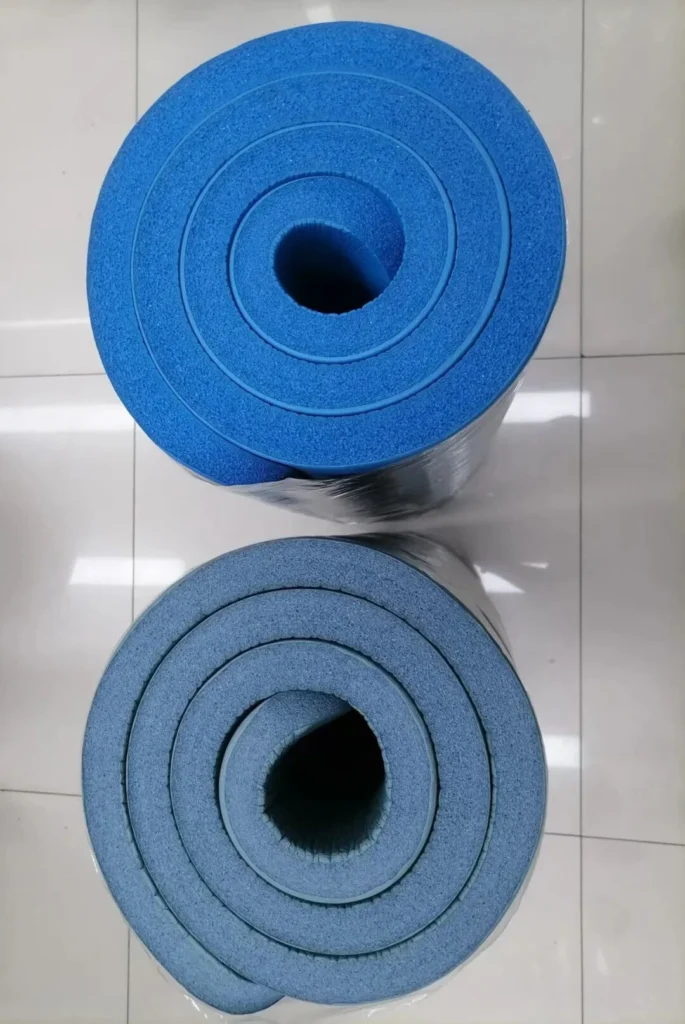
If your mat is “old, slippery, and worn out,” it is time to let it go. To choose the right mat, follow these professional standards:
- The Golden Thickness: 4–6mm is the golden range for yoga, HIIT, and strength training to ensure stability and feedback. If you only do static stretching, 8–10mm is acceptable, but it must be high-density material; avoid any “marshmallow” mats that sink when pressed.
- The Single-Leg Test: Lay the mat flat and stand on it with one leg. If your foot wobbles significantly, the mat edges curl up, or you feel like you are standing on sand—it is unqualified. A good mat should make you feel “stable,” not “floating”.
Comparing Mats for Your Low-Impact Home Workout
| Mat Type | Best For | Potential Drawbacks | Summary |
| Standard Roll-up Mats | Static stretching, Yoga | HIIT, high-impact training | Portable, but prone to material aging (compression fatigue) and loss of grip. |
| Ultra-Soft (Memory Foam) | Light stretching, relaxation | Strength training, Pilates | Comfortable, but lacks the support needed to prevent joint twists. |
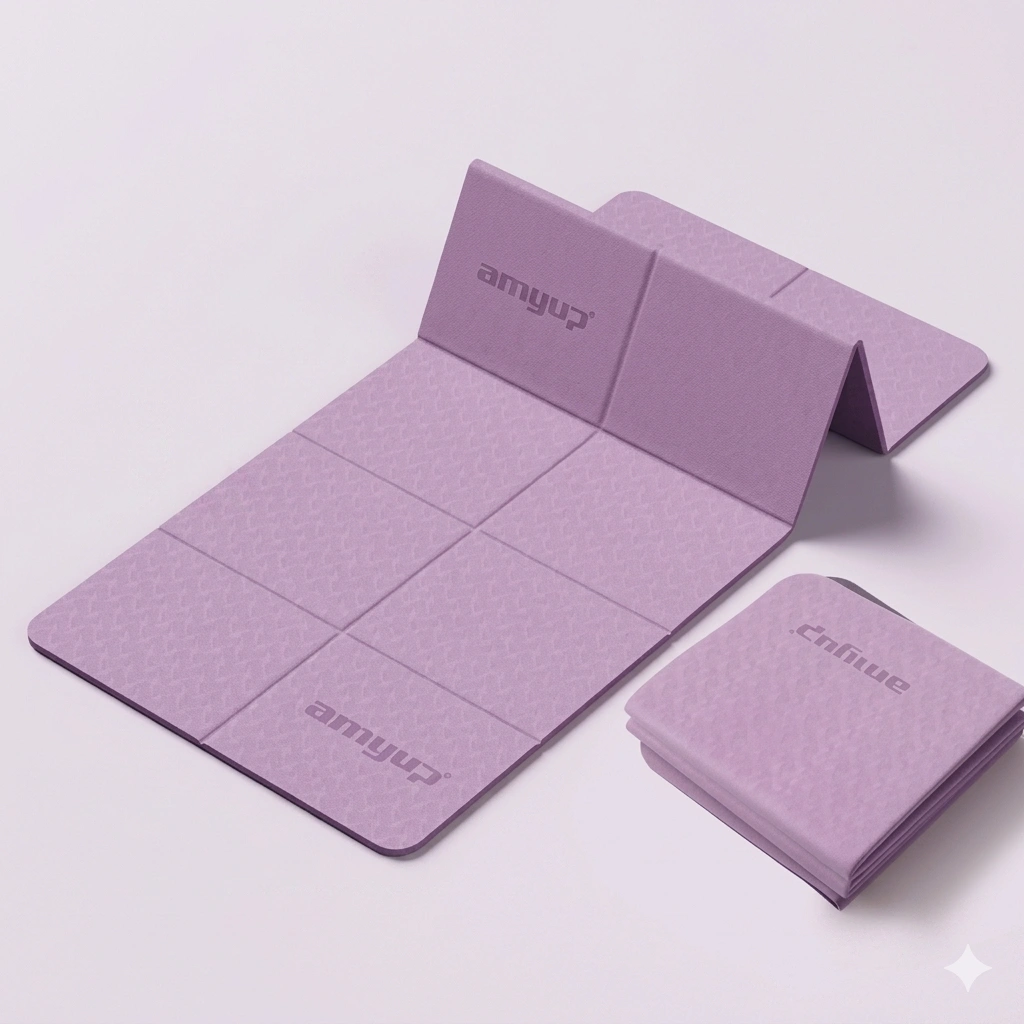
| Foldable Mats | HIIT, Pilates, strength training | N/A (Highly recommended) | Superior structural support, stable, and convenient for home storage. |
| Ultra-Thin Travel Mats | Travel | Kneeling or high-impact moves | Extremely light, but lack the cushioning required to prevent knee impact injuries. |
When comparing mats, always remember that the best mat for a low-impact home workout provides both stability and cushioning.
Beyond the Mat: Protecting Your Joints During a Low-Impact Home Workout
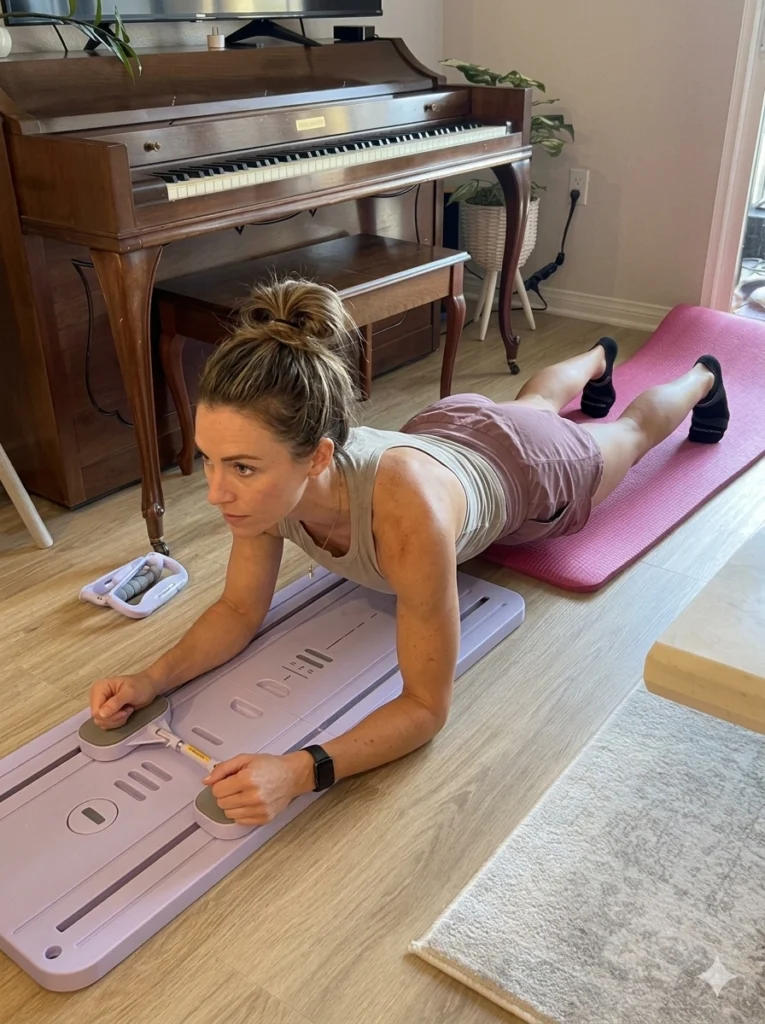
A mat is your foundation, but it cannot protect every joint on its own. To ensure your low-impact home workout remains safe, you must pay attention to your gear.
- Solving Single-Point Pressure: During movements like the one shown in bird-dog-exercise-for-lower-back-pain-from-sitting.jpg, the pressure on your kneecap is significantly higher than during static exercises.
- The Protective Trio: To truly optimize a low-impact home workout, I recommend adding silicone-padded yoga gloves and knee pads to protect your wrists and knees from direct hard-floor contact.
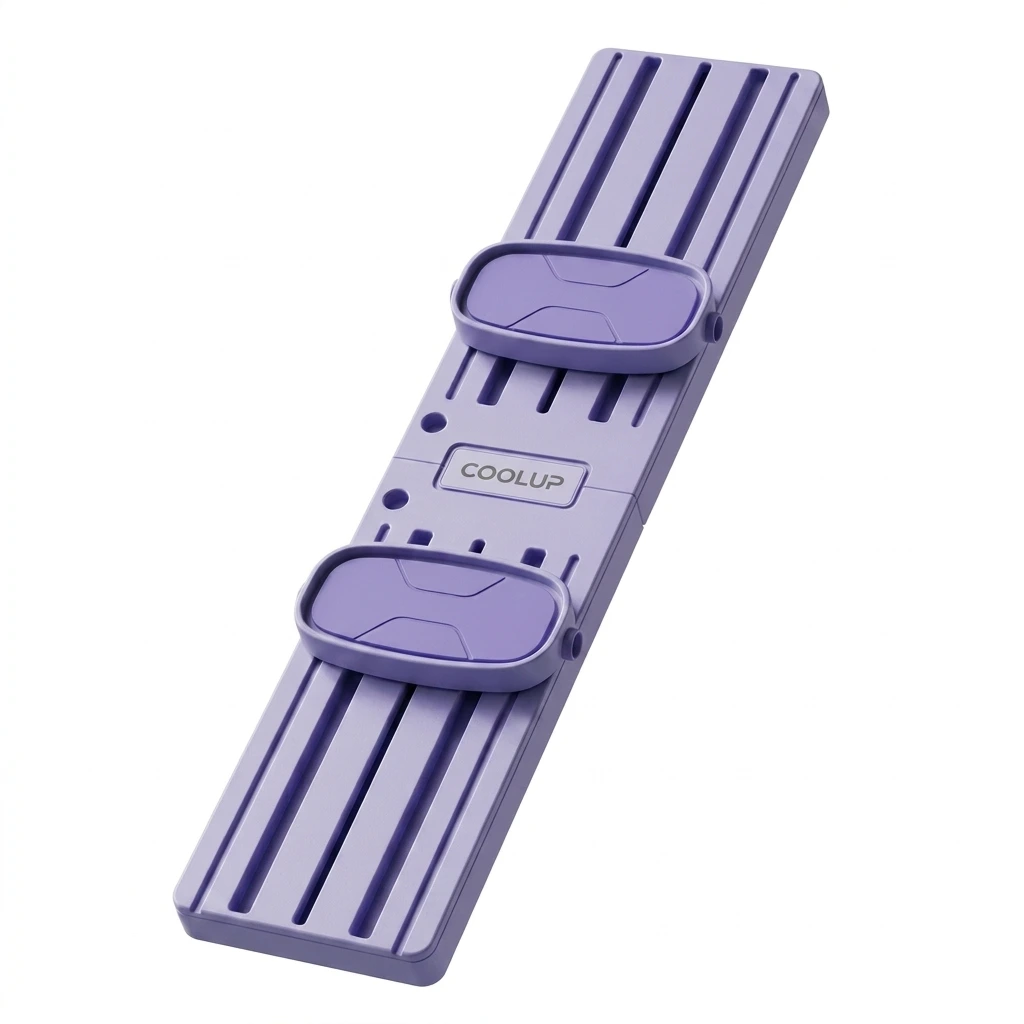
- Why Your Pilates Board Needs a Mat: As seen in home-ski-leg-machine-kneeling-plank-workout-easylean.jpg, you should always place a high-density mat under your Pilates board. This isn’t just to dampen noise and vibration; it is a critical strategy to protect your knees from impacting hard surfaces during kneeling planks.
Why I Recommend Low-Impact, Beginner-Friendly Resistance Training
For beginners or those carrying extra weight, bodyweight exercises can impose heavy, sudden impact on joints. Resistance-based training—like the Pilates equipment shown in easylean-pink-home-gym-essentials-pilates-reformer-bundle.webp—allows you to control the resistance precisely, leading to more accurate muscle engagement and preventing the joint compensation that causes shoulder and back pain.
Consistency is key to any low-impact home workout, and having the right equipment makes all the difference. For more detailed medical guidance, you can refer to professional resources like Mayo Clinic on joint health.
Medical Disclaimer
The information provided on this website is for educational purposes only and is not intended as a substitute for professional medical advice, diagnosis, or treatment. Always consult with your physician or a qualified healthcare provider before starting any new exercise program, especially if you have a history of joint pain or injury. Listen to your body and discontinue any activity that causes pain.
Leave a Comment
You must be logged in to post a comment.