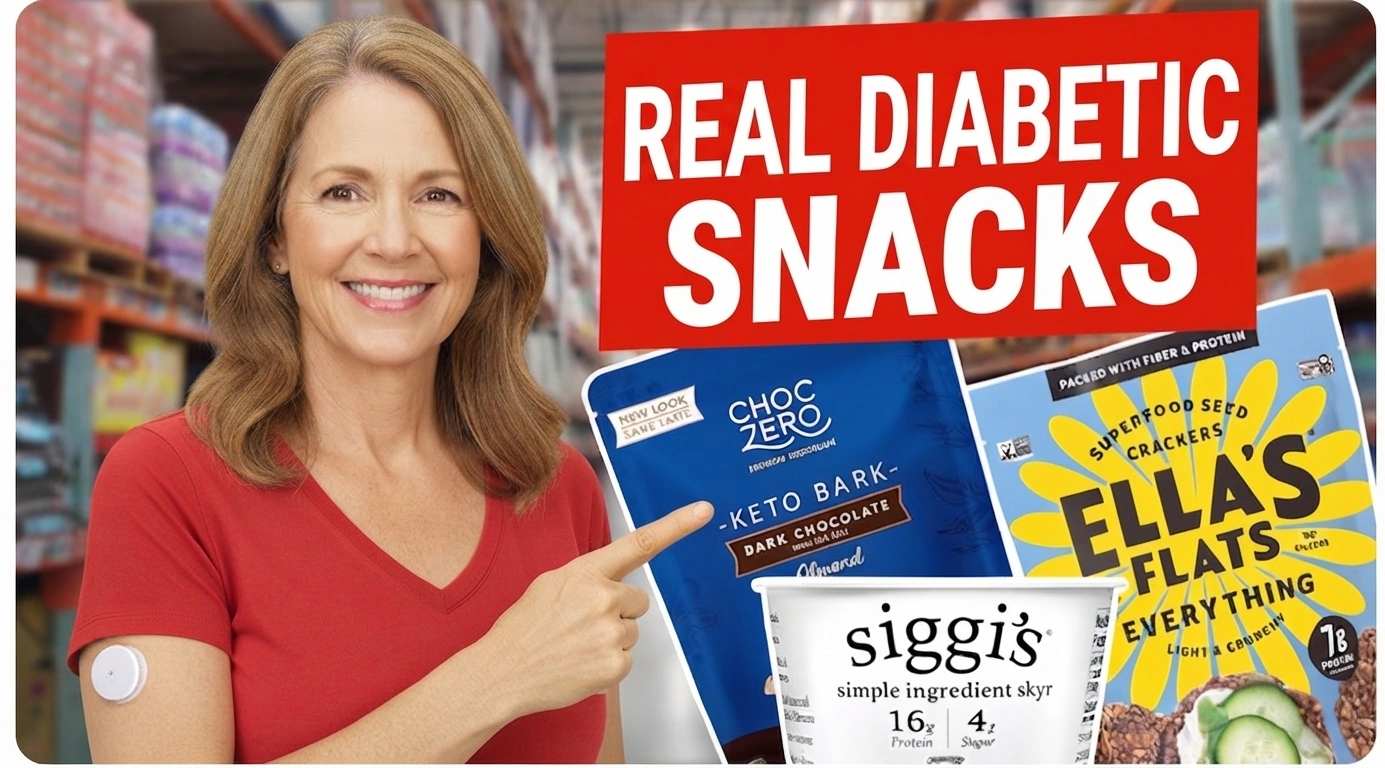
If you stroll down the aisles of Whole Foods, Trader Joe’s, or Sprouts these days, it’s practically impossible to miss a trendy Low-GI snack: sleek, minimalist packaging stamped with bold, reassuring buzzwords like “Low-GI”, “Keto-Friendly”, “Sustained Energy”, or “Clean Label”.
From low-glycemic sourdough and gluten-free cookies to “metabolism-boosting” protein bars and oat milk lattes, the marketing is seductive. The implicit promise is simple: swap your usual junk food for this, skip the blood sugar spike, and the scale will magically take care of itself.
But the reality is far more brutal. Low-GI does not mean low-calorie.
If you treat the “Low-GI” label as a free pass to overeat, you aren’t getting healthier—you’re just falling victim to one of the most profitable marketing scams in the modern wellness industry.
1. Why That “Low-GI Snack” is a Industrial Trap
In our previous article, “The Truth About Weight Loss,” we mentioned the pitfalls of “frequent small meals” and the dangers of “zero-calorie” drinks.
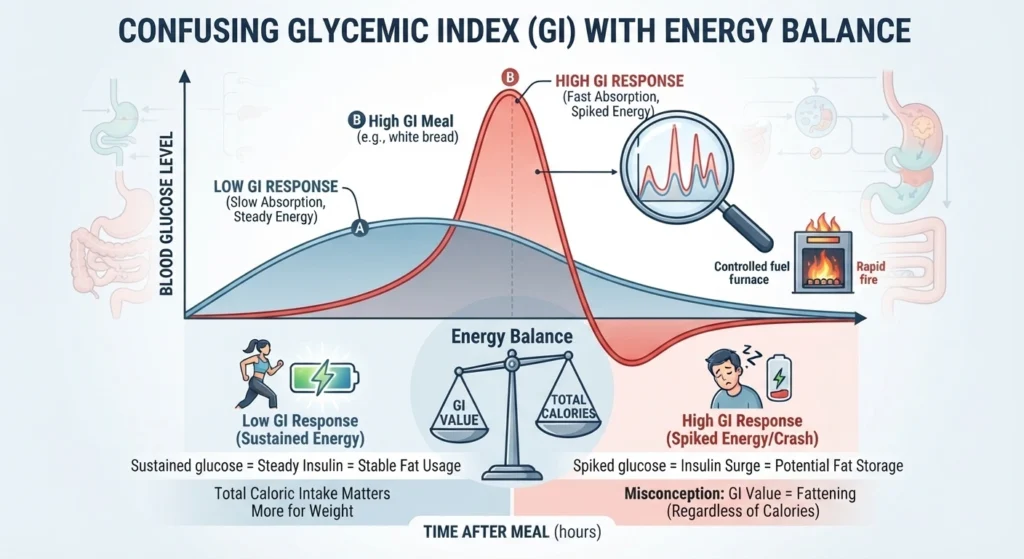
The Core Illusion: Confusing Glycemic Index with Energy Balance
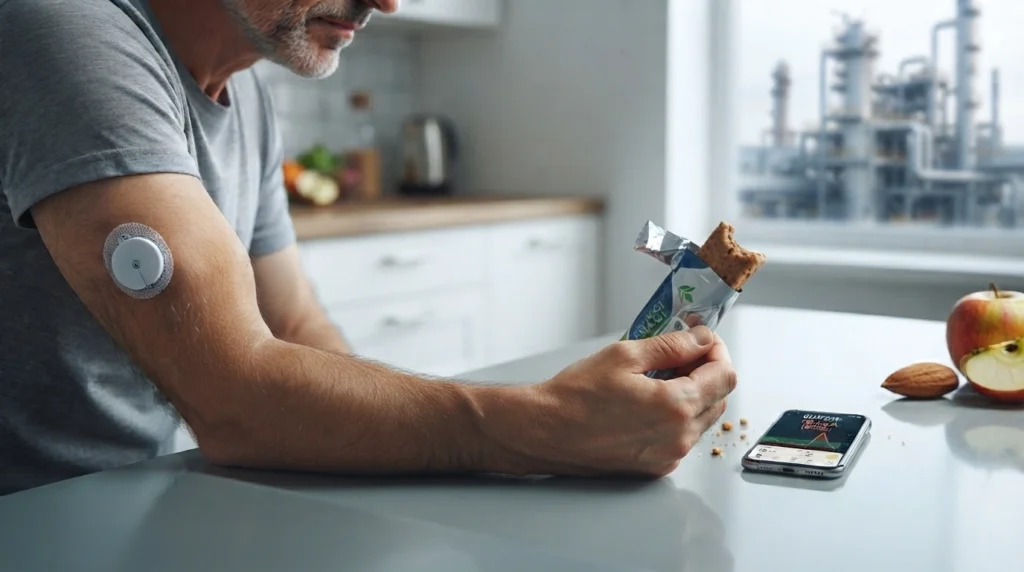
Let’s start with the basics. What actually is GI?
The Glycemic Index (GI) measures how rapidly a carbohydrate turns into blood glucose compared to pure glucose.
- Low-GI foods cause a slower, more gradual rise in blood sugar.
- High-GI foods cause a sharp, rapid spike.
The science behind GI has clinical value—it was originally designed to help diabetics and those struggling with insulin resistance manage their postprandial glucose levels. As leading institutions like the Harvard T.H. Chan School of Public Health note, choosing unrefined, low-glycemic foods can help improve satiety and metabolic health.
The problem isn’t the science; it’s how consumers misinterpret it. A massive chunk of shoppers equate “low-glycemic” with “zero guilt, zero weight gain.”
Let’s look at the numbers that grocery store marketers don’t want you to calculate:
- Nuts and Seeds: Almonds, walnuts, and macadamias have a famously low GI (around 15). But their calorie density is more than four times higher than white rice or white bread. If you sit on the couch mindlessly devouring a giant bag of “low-GI” roasted almonds while binge-watching Netflix, you are packing away vastly more calories than if you drank a couple of cans of Coca-Cola.
- “Low-GI” Artisanal Cookies vs. Sugary Sodas: Certain commercial snack bars and cookies marketed for blood sugar control actually pack more total calories per 100 grams than standard junk food—sometimes by a factor of ten.
A consumer research survey by Consumer Reports highlighted a troubling trend: nearly half of all health-conscious shoppers assume that products bearing “low-glycemic” or “diabetic-friendly” labels are inherently low in calories and can be consumed in larger quantities.
Here is the immutable biological law: Weight management ultimately comes down to a simple energy equation—calories in versus calories out. No fancy GI badge can rewrite the laws of thermodynamics.
2. The Deception: Industrial Food Science and the “Health Halo”
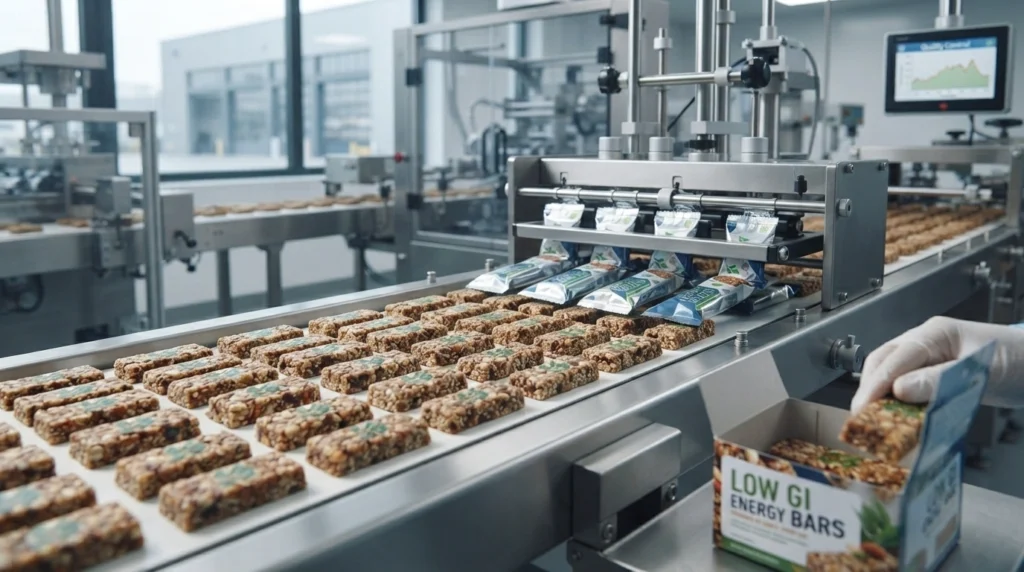
The food industry is brilliant at capitalizing on wellness trends.
Pure, whole-food complex carbs (like steel-cut oats, lentils, or barley) can be earthy, dense, and take time to cook. That doesn’t sell well in a fast-paced corporate culture. So, food scientists step in. To make “low-GI” packaged crackers or meal-replacement bars palatable, manufacturers load them up with refined fats, palm oil, chicory root fiber, and sugar alcohols (like maltitol or erythritol).
Flip over a box of trendy “low-GI energy cookies” at the local health food store and check the ingredient deck. What do you usually find in the top three spots? Wheat flour, palm oil, and maltitol syrup.
It’s still a cookie! They’ve simply engineered the formula with isolated fibers and sugar substitutes to flatten the glycemic response on paper. But look at the Nutrition Facts panel: it’s still sitting at 400 to 500 calories per 100 grams. You think you’re practicing clean eating, but you’re essentially eating high-calorie confectionary disguised as wellness.
Worse yet is the psychology behind it. Behavioral psychologists call this the “Health Halo Effect”.
According to numerous studies in consumer behavior, when people perceive a food as “healthy” or “low-GI,” their brains give them a subconscious moral pass. On average, consumers eat roughly 35% more calories when they believe a food item is health-conscious. You think you’re just having two squares of “diet-friendly” chocolate bark, and before you know it, half the package is gone. That’s the hidden trap of the label.
3. Why Obsessing Over Fixed GI Numbers is Pointless
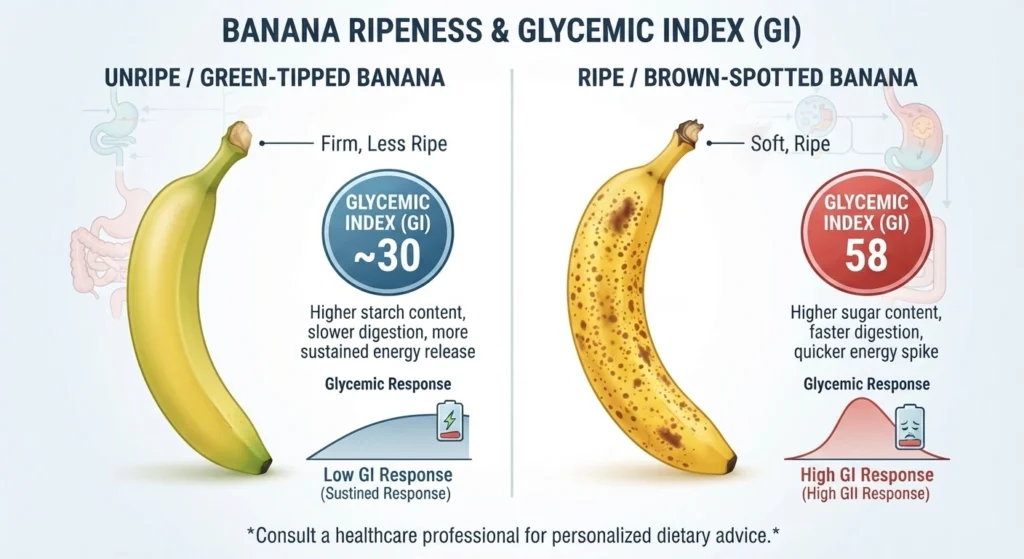
Another inconvenient truth that nutritionists rarely emphasize: A food’s GI value is never fixed. It is a moving target influenced by context:
- Ripeness matters: A slightly green, firm banana has a low-to-moderate GI of around 30. Let it sit on the counter until it’s fully ripe with brown spots, and its GI value rockets up to 58.
- Food combinations change everything: Eating a plain, refined bagel causes a massive glucose spike. But pair that same carbohydrate with healthy fats (like avocado) and quality proteins (like smoked salmon and eggs), and the overall glycemic response of the meal drops dramatically.
- Biochemical individuality: Your metabolic response to a bowl of quinoa is entirely different from your coworker’s or an elite endurance athlete’s.
Micro-managing the specific GI index of every single bite you take is a fool’s errand. How you structure and balance your overall plate matters infinitely more than chasing a single magical ingredient.
4. How to Cut Through the Noise and Eat Smart
If you are tired of spending your paycheck on overpriced supermarket marketing ploys, it’s time to strip your diet back to basics:
- Calories are still king: No matter how low the glycemic index is, if a food surplus drives your daily intake past your expenditure, you will gain weight. Low-GI does not mean zero-calorie.
- Prioritize whole foods over packaged goods: Real, single-ingredient whole foods—like sweet potatoes, quinoa, rolled oats, and fresh vegetables—will always beat factory-engineered “low-GI” protein bars and diet cookies.
- Read the ingredient label, not the front box: If the front of the packaging screams “Low-GI,” but the back reveals palm oil, modified starches, and refined flours in the top ingredients, put it back on the shelf.
- Master the macronutrient trio: Never eat isolated carbs. Always combine complex carbohydrates with high-quality lean proteins and healthy fats to naturally blunt blood sugar spikes and keep hunger at bay for hours.
At the end of the day, remember this golden rule: Whole, unprocessed food will never lie to you, but the marketing pitch on the front of a glossy box usually does.