

Let me start with a quick question: Are you slouching in your office chair or buried deep into your couch right now while reading this? If the answer is yes, do yourself a favor: reach down and pinch your butt right now, at this very second.
Does it feel completely soft and mushy? More importantly, when you finally stand up after hours of sitting, do your glutes feel slightly numb, tight, or achy?
If you nodded along to any of this, you need to read every single word below very carefully. In the medical community, there is a surprisingly terrifying term for this exact phenomenon: “Dead Butt Syndrome” (DBS), clinically known as Gluteal Amnesia.
Yes, you heard that right—your butt might have literally forgotten how to function.
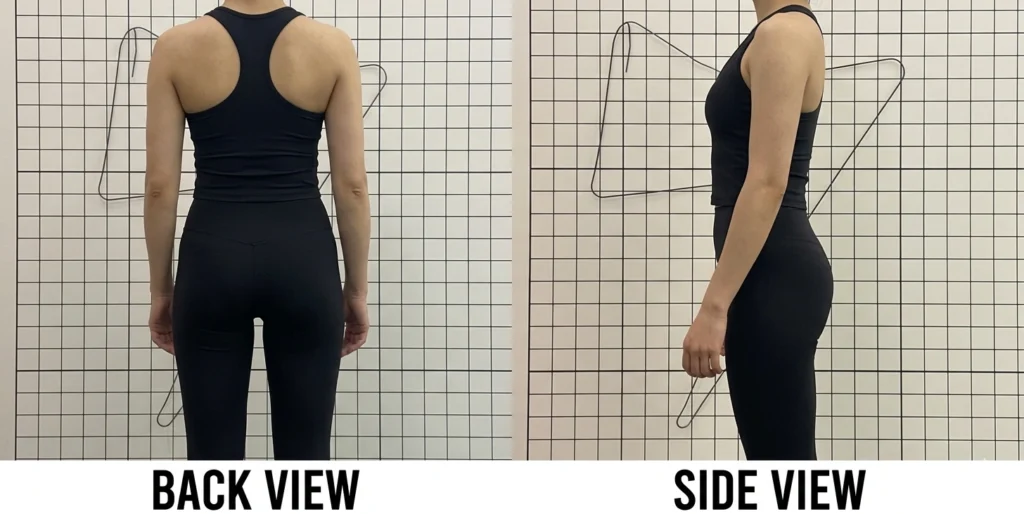
How Does a Butt “Die”?
When people hear the phrase “dead butt,” they often imagine horrific scenarios of muscle tissue necrosis or severe wasting. Don’t panic. It doesn’t mean your muscles are physically dying; rather, they have developed a severe case of “amnesia.”
Our posterior structure is primarily powered by three major muscles:
- Gluteus Maximus: The main powerhouse responsible for walking, running, and extended movements.
- Gluteus Medius & Minimus: The crucial stabilizers that keep your pelvis level when moving.

Together, they act as your body’s primary “power engine” [1]. However, when you sit continuously at your desk or on your couch for 7 to 8 hours (or longer) every single day, tragedy strikes.
In a prolonged seated position, your glute muscles are held in a constantly stretched, entirely passive state. Over time, your brain begins to assume: “Oh, it looks like we don’t need this muscle group anymore.” Consequently, the neurological signals between your central nervous system and your glutes grow weaker. Put simply, your brain literally forgets how to use your butt.
Simultaneously, the muscles at the front of your thighs and hips (hip flexors) become chronically shortened and hyper-tight due to constant sitting. This combination—over-stretched, inactive muscles on one side and tight, overactive muscles on the other—completely suppresses glute function. Your butt isn’t broken; it’s simply gone on strike and fallen into a deep coma.
The Dangers of Gluteal Amnesia: It’s Not Just About Aesthetics
You might think: “So what if it’s ‘dead’? I don’t rely on my butt to make a living. At worst, my glutes just look a bit flat or saggy in jeans, which means I won’t look as good in my clothes.” If that is your mindset, you are making a massive mistake. The cascading negative impacts of Dead Butt Syndrome are far more severe than a flat profile.
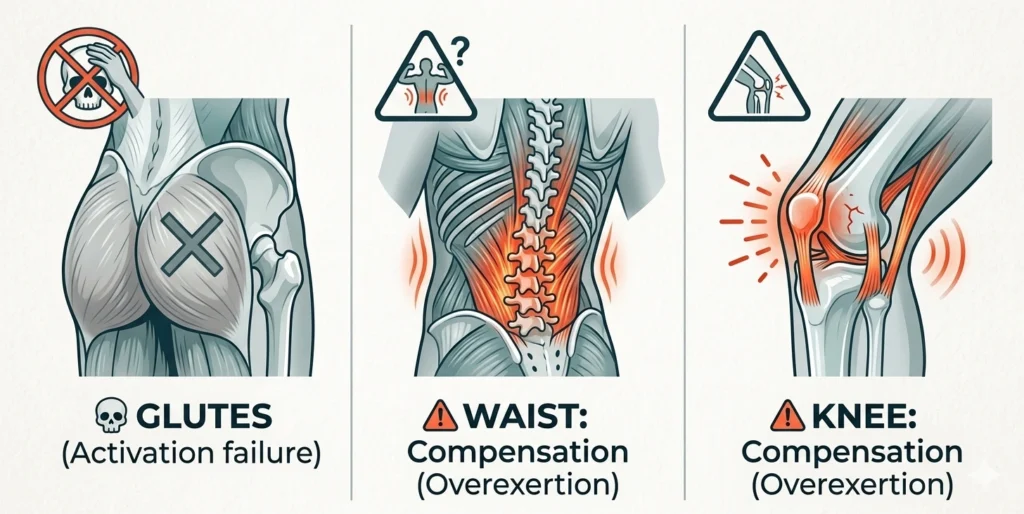
The human body is remarkably adaptive. When it realizes the glutes aren’t doing their job, but you still need to walk, run, or climb stairs, it shifts the workload elsewhere. This is called compensation.
- Your Lower Back Takes the Hit: Your lower back muscles are forced to step in and cover for your lazy glutes. Movements like hip extension that should be driven by the powerful gluteus maximus are transferred to your lower spine. Over time, you will experience chronic, debilitating lower back pain, even without doing heavy lifting.
- Your Knees Bear the Brunt: If the gluteus medius fails to stabilize the pelvis, your hips tilt and sway unevenly while walking. Your knees end up absorbing this erratic lateral impact directly [2].
In plain English: Your butt slacks off, and your lower back and knees pay the price.
To make matters worse, this can actually make your thighs look thicker! Because your glutes are sleeping, your thigh muscles (quadriceps) are forced into constant overtime. Over time, this constant overworking causes thigh muscles to hypertrophy and look bulkier. You might think your legs look thicker due to body fat, but it’s actually because your butt is being lazy!
Self-Assessment: Are Your Glutes Still “Alive”?
Determining whether you have Gluteal Amnesia isn’t about how good you look in the mirror; it’s about functional activation. Try these two simple self-tests:
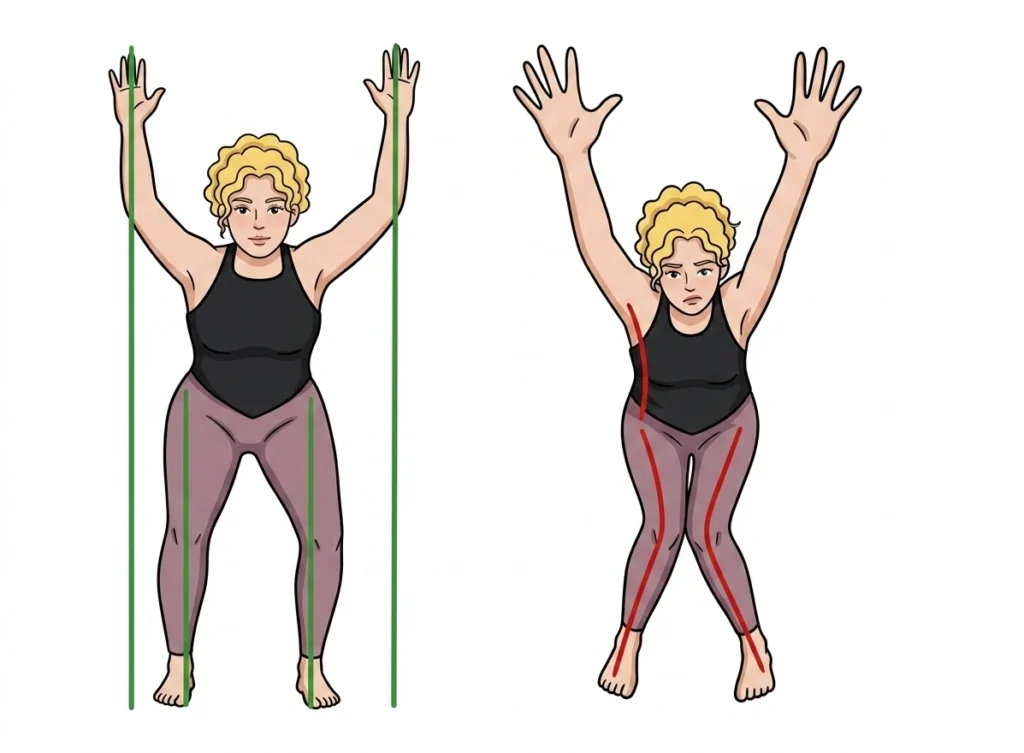
1. The Bodyweight Squat Test
Perform a basic squat in front of a mirror. If your torso tilts drastically forward instead of staying relatively upright, or if your knees cave inward toward each other (forming an “X” shape), your glutes are failing to fire properly. Your butt needs immediate rescue.
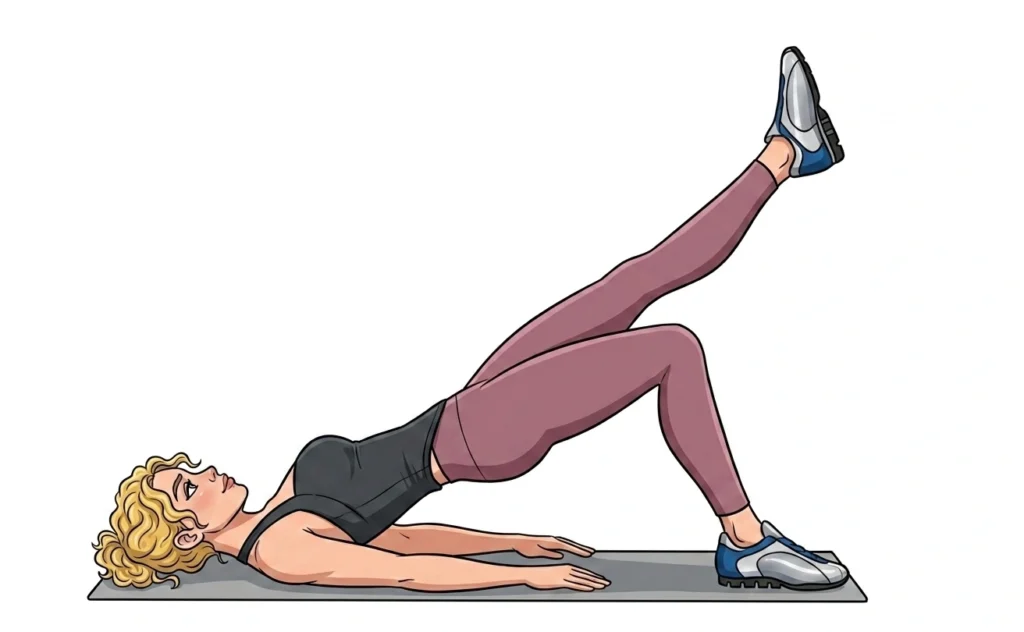
2. Single-Leg Glute Bridge Test
Lie flat on your back, lift one leg into the air, and push through the opposite heel to lift your hips. You should feel the burn squarely in your glutes. If you primarily feel your lower back straining or your hamstrings cramping up and getting exhausted, it means you have Dead Butt Syndrome.
If you failed either of these tests, congratulations: your butt officially needs saving. The good news is that Gluteal Amnesia is entirely reversible. It is a functional issue, not permanent structural damage. As long as you are willing to move correctly, you can wake your glutes right back up.
How to Revive Your Glutes (Step-by-Step)
The core strategy is twofold: break up periods of prolonged sitting and re-educate your brain to fire the glutes. For every hour you sit, stand up and move for 10 minutes to re-energize your lower body. Here are the top 5 equipment-free movements recommended by physical therapists that you can do right at home:
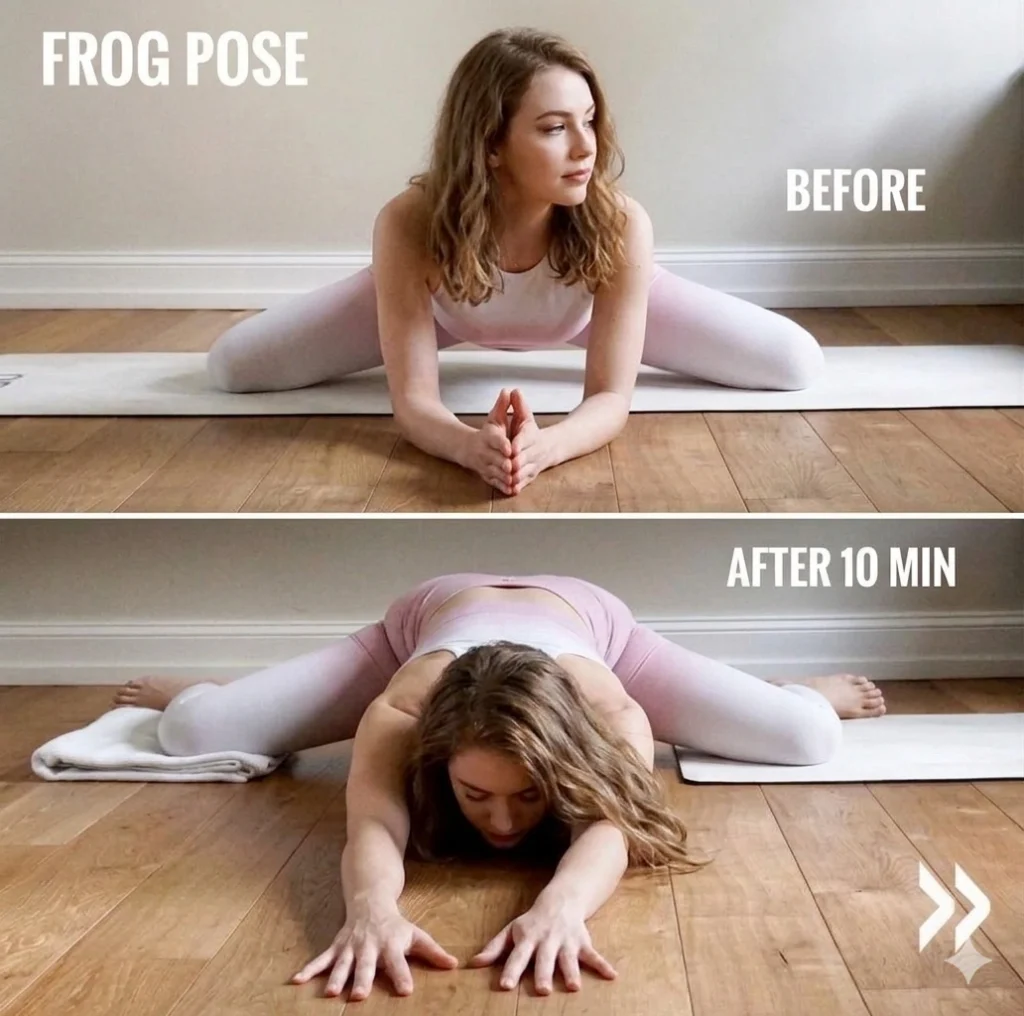
1. The Frog Stretch (Prone Frog)
Start on your hands and knees (all-fours). Slowly widen your knees out to the sides as far as comfortable while keeping your shins parallel and feet tucked behind them (creating a 90-degree angle at the knee). Gently rock your hips backward and downward toward the floor. This releases tight hip flexors and opens up the pelvic region.
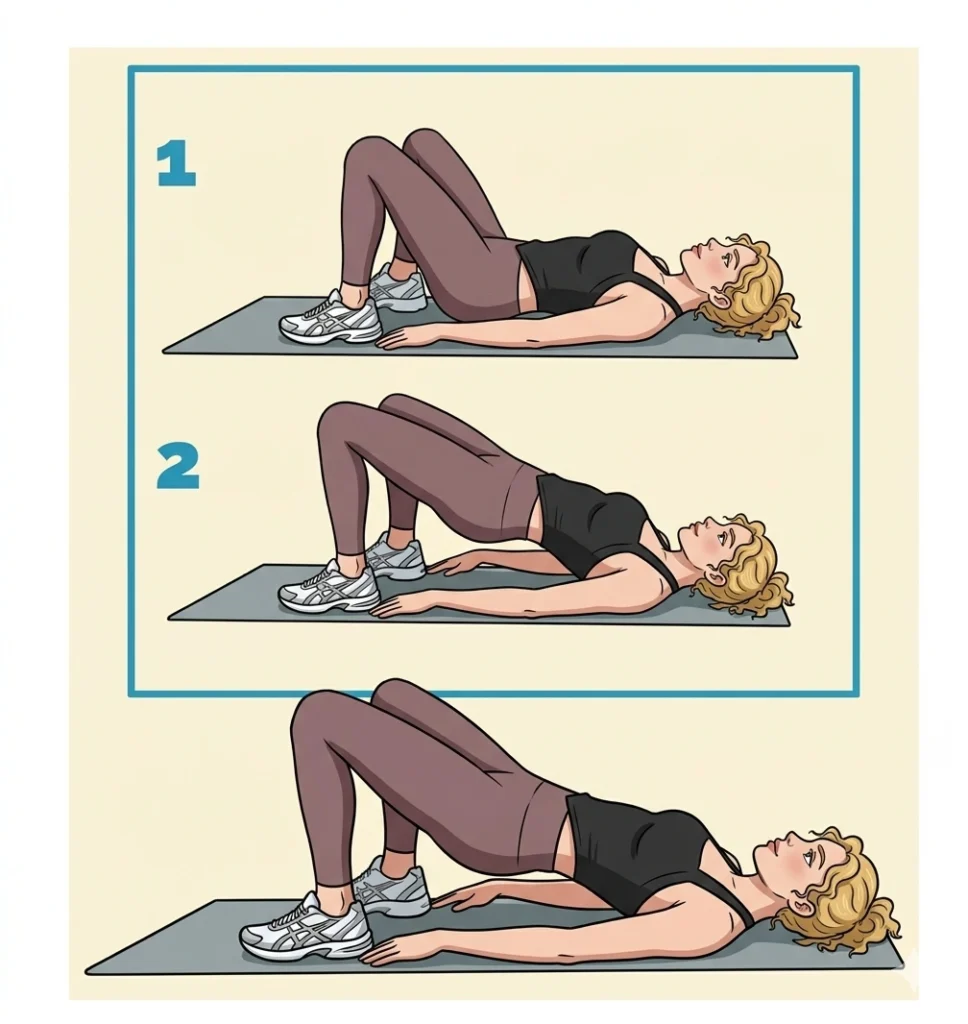
2. Classic Glute Bridge
Lie flat on your back with your lower back pressed firmly into the floor. Bend your knees at 90 degrees and place your feet flat on the ground. Squeeze your glutes tightly and drive through your heels to lift your hips until your thighs and torso form a straight line. Hold for 1 second at the peak contraction before slowly lowering down.
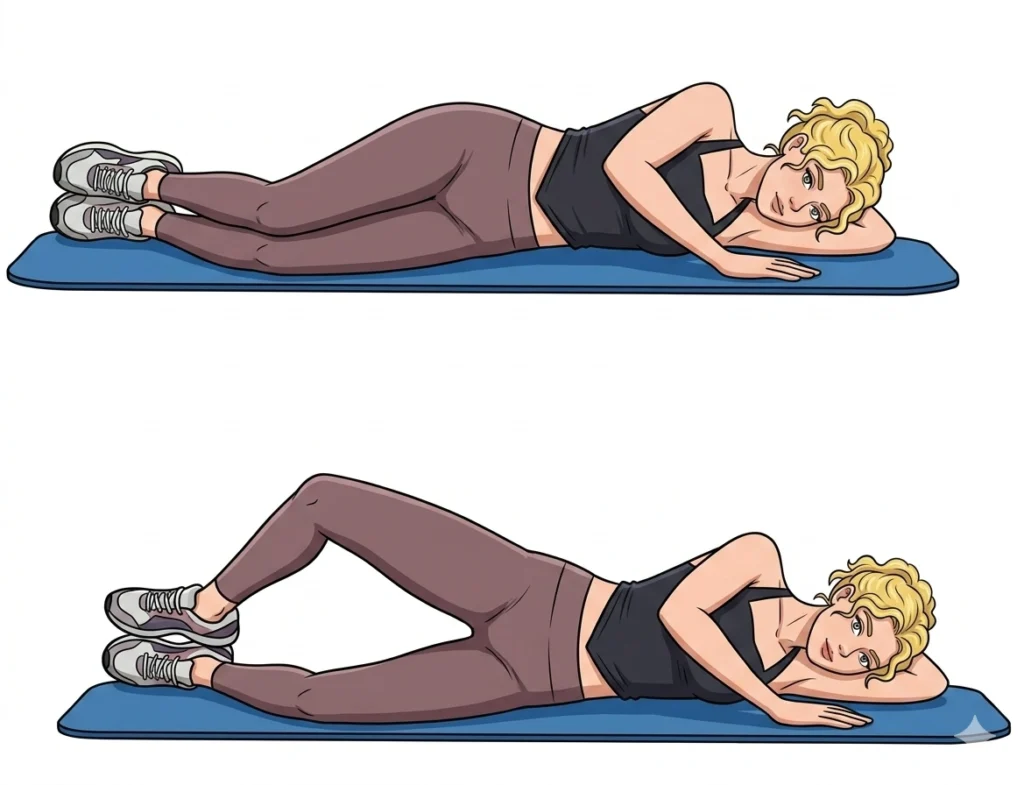
3. Clamshells
Lie on your side with your hips and knees bent, keeping your feet stacked together. Your spine and heels should align in a straight line. Keeping your feet touching, slowly raise your top knee toward the ceiling without rotating your lower back or pelvis. Exhale as you lift and feel the side of your hip contract; inhale as you slowly lower it back down.
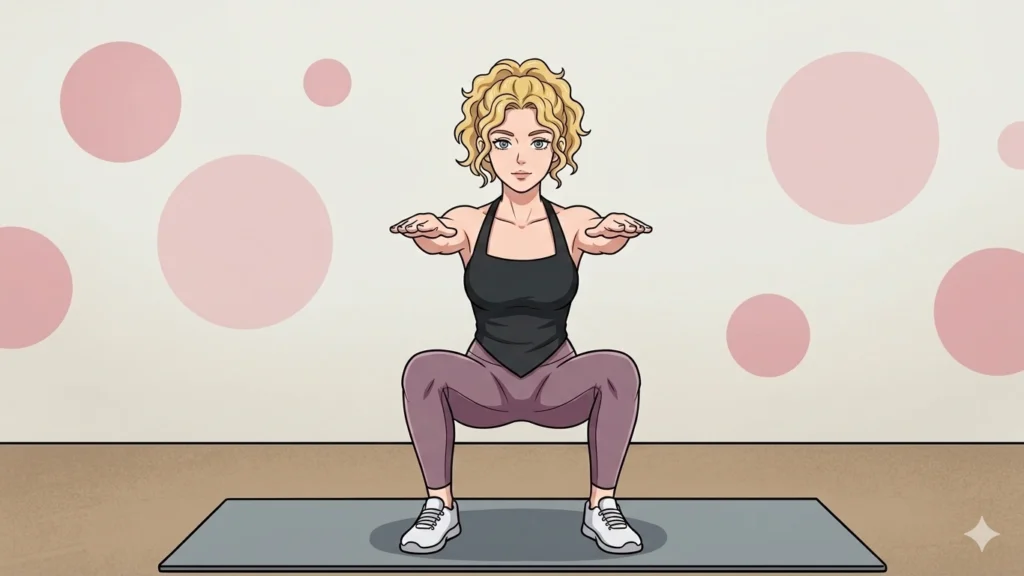
4. Controlled Squats
Stand with feet shoulder-width apart (or slightly wider). Initiate the movement by driving your hips back and down, as if sitting in an invisible chair. Ensure your knees track in line with your toes—avoid letting them cave inward or overshoot your toes excessively. Control the descent until thighs are parallel to the ground, keeping your back straight throughout.
5. Bulgarian Split Squats
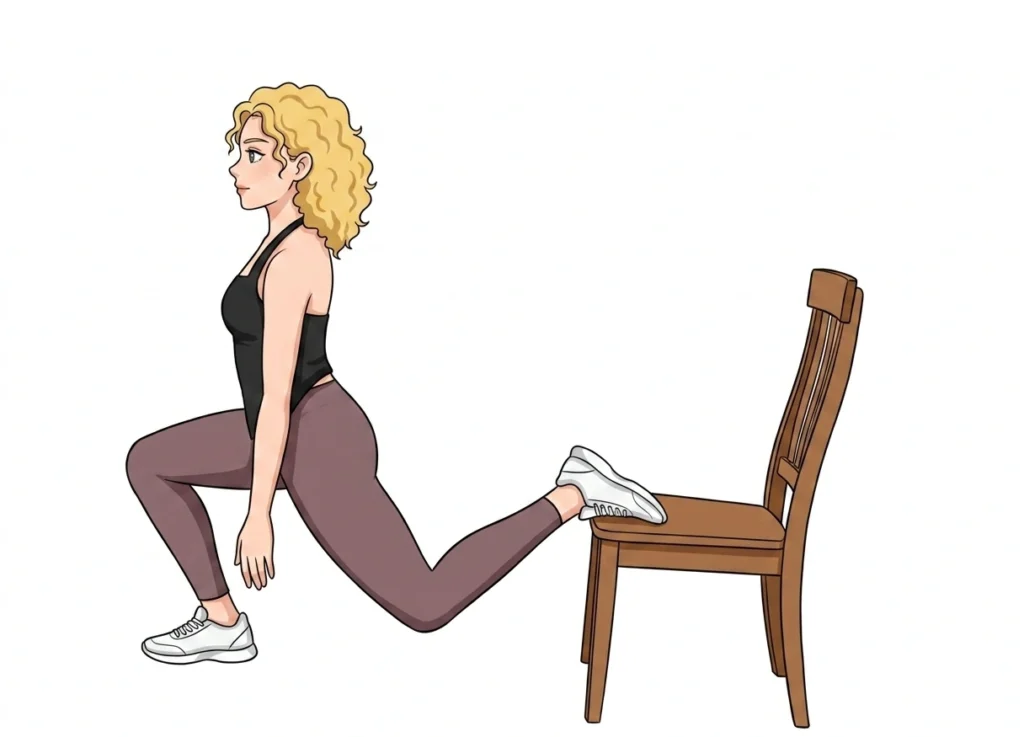
Stand about two feet in front of a sturdy chair or couch. Extend one leg backward and rest the top of your foot on the edge of the chair. Lower your hips until your front thigh is almost parallel to the floor, ensuring your front knee stays tracked safely over your ankle. Lower according to your flexibility and drive back up using the glute of your front leg.
Conclusion: Reclaim Your Glutes Today!
Consistency is key. Commit to these exercises daily, and you will quickly restore the mind-muscle connection with your posterior chain.
Stop letting sedentary habits dictate your physical health. Move more, activate your glutes daily, and reclaim a powerful, pain-free, and well-sculpted physique!
For more science-backed fat loss, posture correction, and lean muscle building tips, stay tuned to www.easylean.fit!
References:
General Principles of Gluteal Muscle Biomechanics and Neural Activation in Human Gait.
Clinical Studies on Pelvic Instability, Patellofemoral Compensation, and Lower Extremity Biomechanics due to Sedentary Lifestyles.
Leave a Comment
You must be logged in to post a comment.