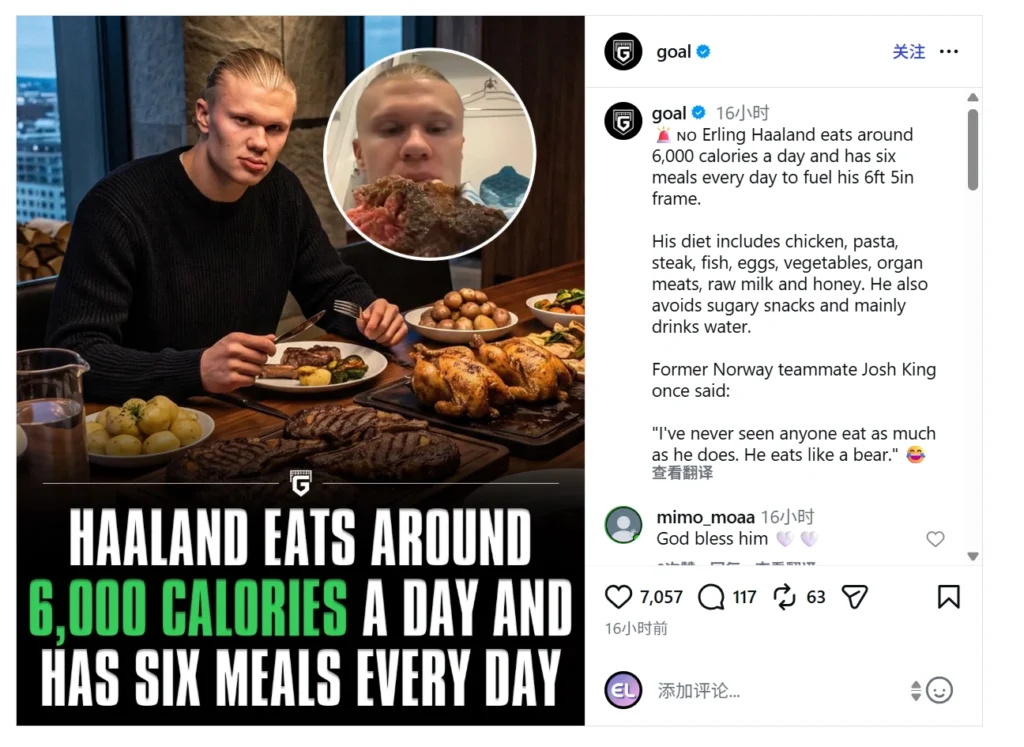
Have you all been watching the World Cup lately? Beyond the action on the pitch, there have been plenty of amusing stories—from the England team’s gear getting stolen and Haaland’s 6,000-calorie diet to the Norwegian team having to airlift in ingredients 🤣.
Seeing these athletes maintain incredibly low body fat and explosive power despite the intense physical demands of the game, I couldn’t help but wonder: what exactly do these top-tier footballers eat every day?
Curious to find out, I looked into the daily diets of Messi, Cristiano Ronaldo, and Haaland. I’ve summarized the key features of their nutritional regimens—highlighting what the average person can emulate and what should absolutely not be blindly copied.
1. Haaland: A 6,000-Calorie “Nutrient-Dense” Diet
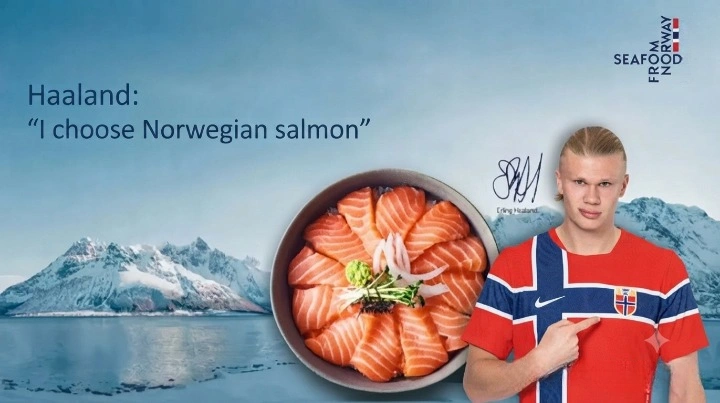
The reason Haaland’s diet has gone viral boils down to two key figures: a daily intake of 6,000 calories and his signature combination of raw organ meat and raw milk.
His daily food intake on a typical training day looks something like this:
- Breakfast: 4–5 fried eggs (usually with bacon) + a large slice of whole-wheat sourdough bread + a large glass of fresh raw milk.
- Lunch: Two steaks + egg-fried rice (served with plenty of asparagus and other greens) + fruit mixed with pure natural honey.
- Pre- and post-match fuel: His father (a former Premier League player) unfailingly prepares a special homemade meat-sauce lasagna for him before every home game—a dish Haaland calls his “magic fuel.”
- Dinner: Large cuts of red meat (such as tomahawk steak or beef ribs) + organ meats (like beef heart and liver) + pan-seared sea bass.
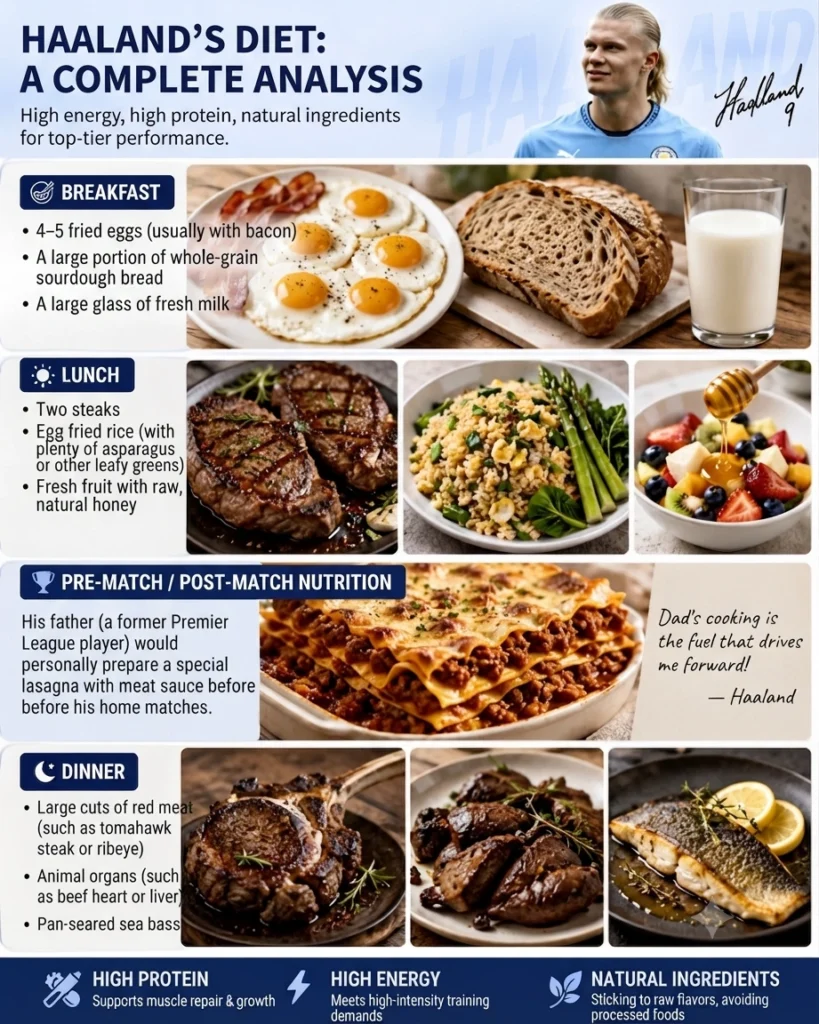
Haaland follows a “Paleo-style” diet that is extremely high in calories, fat, and protein. He strictly avoids processed foods; in a documentary, he even remarked that he cares more about the cows grazing in the pastures near his home than he does about McDonald’s 🤭
2. Messi: From “Junk Food” to the “Mediterranean Diet”
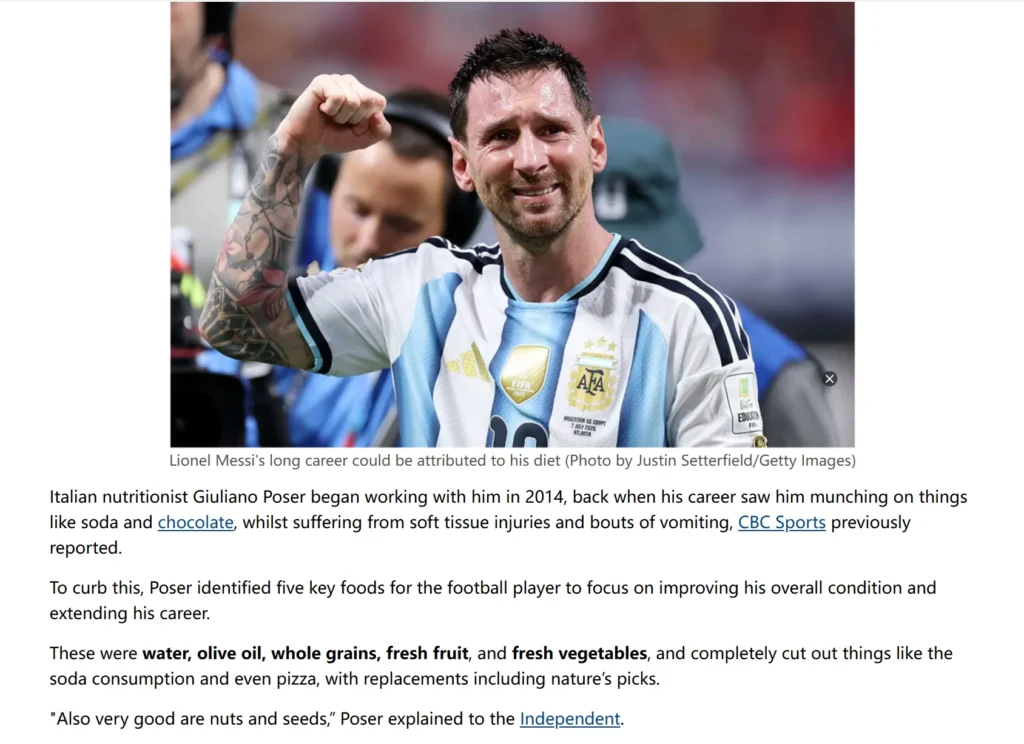
Early in his career, Messi actually encountered physical endurance issues, even experiencing episodes of vomiting on the pitch. Starting in 2014, under the guidance of an Italian nutritionist, he underwent a radical overhaul of his diet. He completely gave up his former favorites—pizza, soft drinks, and sweets—and adopted a Mediterranean diet that shunned modern processed foods.
- Breakfast: Whole-wheat bread with chopped fresh tomato and olive oil, 1–2 boiled eggs, a small portion of fresh fruit (such as pineapple or berries), and green tea.
- Lunch: Grilled chicken breast or tuna (canned in water), a large salad of mixed greens, tomatoes, and cucumbers dressed with lemon juice and olive oil, and a small bowl of brown rice.
- Dinner: Steamed or grilled white fish (such as cod), steamed broccoli and carrots, and occasionally a small steamed potato.
- Snacks: A small handful of plain almonds or walnuts, and unsweetened Greek yogurt.
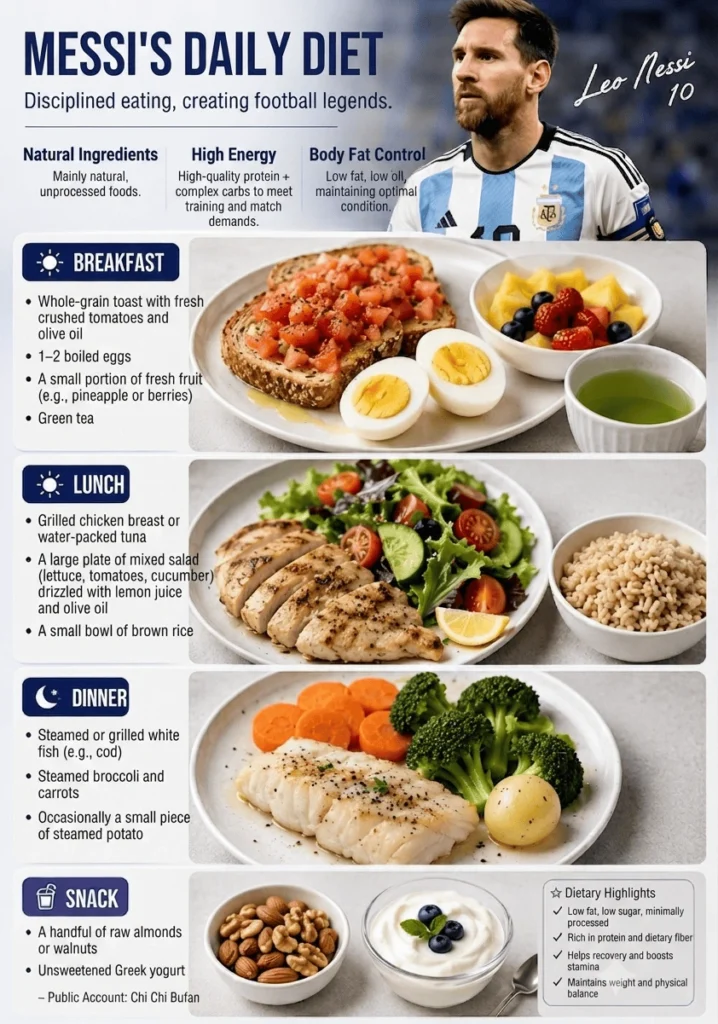
Messi rarely consumes red meat, eating small amounts of lean beef only on very rare occasions. His diet excludes added sugars and relies primarily on water and olive oil. This nutritional approach—characterized by a low glycemic load and high intake of healthy fats and fiber—significantly reduces chronic inflammation in his body, enabling him to maintain mental clarity and stamina during high-intensity matches.
3. Cristiano Ronaldo: A sugar-avoidance fanatic with extreme self-discipline.
Of the three, Cristiano Ronaldo’s diet is arguably the most “monotonous,” yet it yields the most extreme results in terms of physique sculpting. He consistently maintains a body fat percentage of around 7%, with clearly defined muscle definition. Teammates have joked that a meal at his home consists of little more than boiled chicken breast and salad.

His dietary philosophy is simple: treat food purely as fuel, eliminating all unnecessary digestive strain and blood sugar fluctuations.
- Breakfast: Whole-grain cereal (unsweetened) with low-fat milk, berries, and a boiled egg.
- Lunch: Grilled sea bass or swordfish steak, a large vegetable salad dressed with olive oil and vinegar, and a small portion of quinoa.
- Afternoon snack: Chicken breast wrap (whole-wheat tortilla) filled with plenty of lettuce and tomato.
- Dinner: Steamed cod with zucchini and spinach, occasionally accompanied by black beans. If training volume is very high, a baked potato is added.
- Pre-bedtime snack: A slow-release protein shake or an apple.
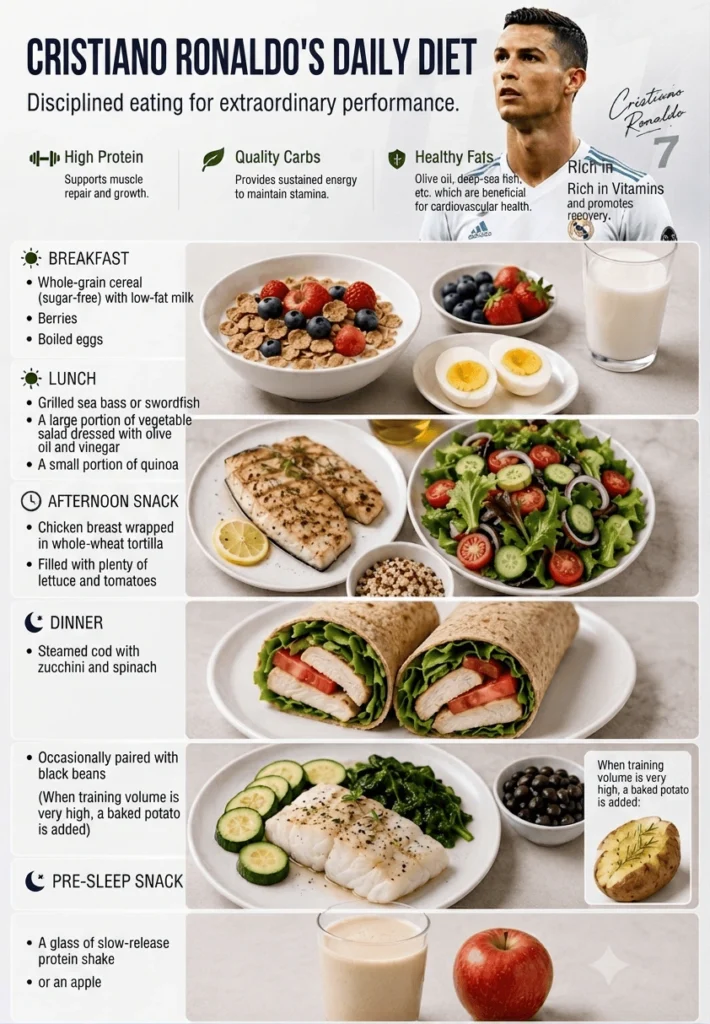
His diet completely excludes refined sugars and industrially processed foods; instead, he relies on a low-sugar, low-carbohydrate regimen rich in high-quality protein and maintains a consistent eating schedule to keep his metabolism at its peak. He abstains entirely from alcohol and never touches sugary sodas. A moment from a Euro Cup press conference—where he moved bottles of cola out of sight—became iconic. To him, sugar and alcohol are the primary enemies that undermine athletic performance and recovery.
4. What do the diets of star athletes have in common, and what can ordinary people learn from them?
1️⃣ Cut back on added sugars and highly processed foods.
Without exception, athletes exclude sugary drinks, fried foods, ready-made meals, and highly processed snacks from their daily diets. This is the most fundamental rule—and the one that is easiest for the average person to follow without breaking the bank. You don’t need to adopt their expensive diet; simply giving up milk tea, cake, and potato chips will lead to a noticeable improvement in your physical well-being.
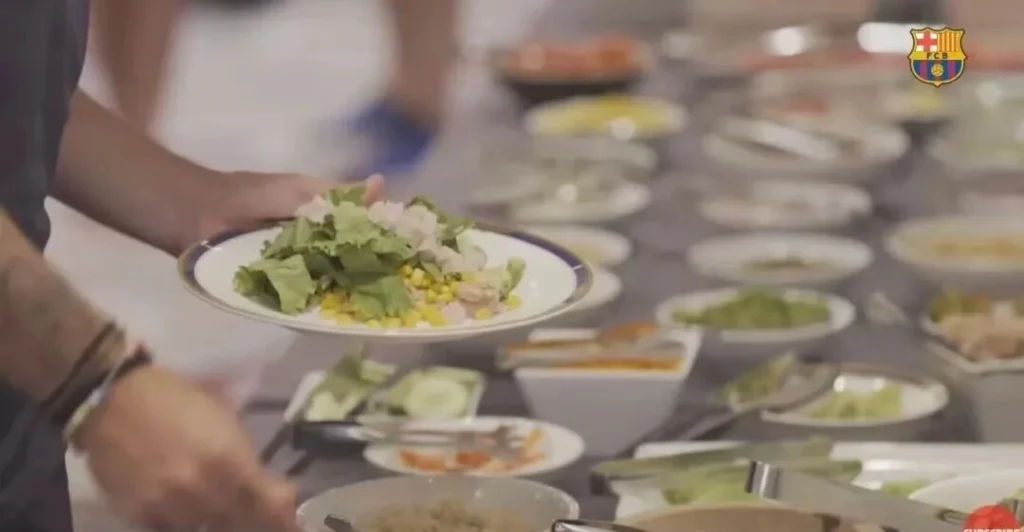
2️⃣ Ensure high-quality protein in every meal.
Whether it is Haaland’s beef heart and steak, Messi’s tuna, or Ronaldo’s cod, their meals always feature highly nutritious protein sources. Protein not only helps maintain muscle mass but also promotes satiety and stabilizes blood sugar levels—factors crucial for fat loss and sustaining energy. For the average person, an intake of 1.2–1.6g per kilogram of body weight is sufficient; there is no need to aim for the high-protein ratios adopted by professional athletes.

3️⃣ Consume healthy fats and avoid bad ones.
Olive oil, avocados, and deep-sea fish are their primary sources of fat; Omega-3s not only fight inflammation but also improve metabolism. Conversely, athletes completely avoid trans fats and hydrogenated vegetable oils found in fried foods.
4️⃣ Great emphasis is placed on the timing and quality of carbohydrate intake.
Rather than cutting out carbohydrates entirely, they consume low-GI options—such as whole grains and tubers—before and after high-intensity training to replenish muscle glycogen. During non-training periods, and especially at dinner, carbohydrate intake is significantly reduced or replaced by large quantities of vegetables.

5. Do not blindly imitate these points. Pro Athlete Diet Tips You Can Use at Home
● Do not imitate the practice of consuming raw organ meats or raw milk.
Professional athletes’ food supplies are subject to strict bacterial testing and traceability systems; consuming raw foods from ordinary markets poses serious food safety risks, including potential infection with parasites and pathogenic bacteria. Eating cooked organ meats is perfectly adequate for meeting nutritional needs.
● Do not completely eliminate any specific food group.
For instance, Cristiano Ronaldo’s decision to completely avoid dairy and white flour is based on his personal physical tolerance and the demands of elite athletic performance. Average people need not go to such extremes; milk and white flour can be consumed in moderation as part of a normal diet, and a balanced approach is far more sustainable in the long run.
● Avoid aiming for extremely low body fat
While professional athletes maintain body fat levels of 7–8% to optimize performance, a healthy range for the average person is 15–20% for men and 20–25% for women; dropping below these levels can actually impair immune function and disrupt the endocrine system.
The moments of glory athletes experience on the field are built upon a daily routine of eating, sleeping, and training. Since the start of this World Cup, we’ve witnessed dramatic comebacks, shocking upsets, the steadfastness of veterans, and the dazzling performances of newcomers—with unique highlights in every match.
After seeing how sports stars approach their nutrition, are you inspired to create your own health plan? Whether you’re looking to adjust your diet or try Pilates for the first time, EasyLean is here to support you. To help you kickstart a healthier lifestyle, we’re currently offering discounts across our entire range of home fitness equipment; picking up a few handy tools can often yield more visible changes to your physique than dietary adjustments alone. Head over to our best-sellers section to shop now!
Have you been watching the World Cup lately? Which team are you rooting for? Feel free to share your thoughts in the comments!
If you enjoyed this article, please give it a like or a recommendation. You can also share it with fellow football fans to see if they know about the stars’ off-field dietary habits. ⚽️
Disclaimer:
The content provided herein is for informational and entertainment purposes only and does not constitute medical, nutritional, or professional fitness advice. The dietary regimens of professional athletes mentioned in this article are tailored to their specific professional requirements and guided by expert teams; they are not suitable for the general public. Please consult your physician or a registered dietitian before making significant dietary changes or starting a new fitness program, especially if you have pre-existing health conditions or are currently undergoing medical treatment. The author and EasyLean assume no legal liability for any physical discomfort or health issues arising from the adoption of the advice contained in this article.