


Is leaking urine or a persistent “mummy tummy” an inevitable part of motherhood? Absolutely not! In the fields of medicine and physical therapy, the golden key to pre-conception prep and postpartum recovery is hidden within your Pelvic Floor. During pregnancy, hormonal shifts (like increased relaxin) and shifts in your center of gravity place immense pressure on this “web” of muscles. Today, we’ll break down the staged self-rescue plans most recommended by Western OB-GYNs and rehabilitation experts.
🤰 Stage 1: Pregnancy Prep & Antenatal
- Core Goal: To enhance muscle coordination and the ability to both contract and “fully relax.”
- Common Pitfall: Many believe they must only perform Kegels to “tighten” the area. However, vaginal delivery requires excellent elasticity and the ability to relax; excessive tightness can actually prolong labor or lead to severe tearing.
- Golden Exercise: Pelvic Tilts.
Equipment & Implementation
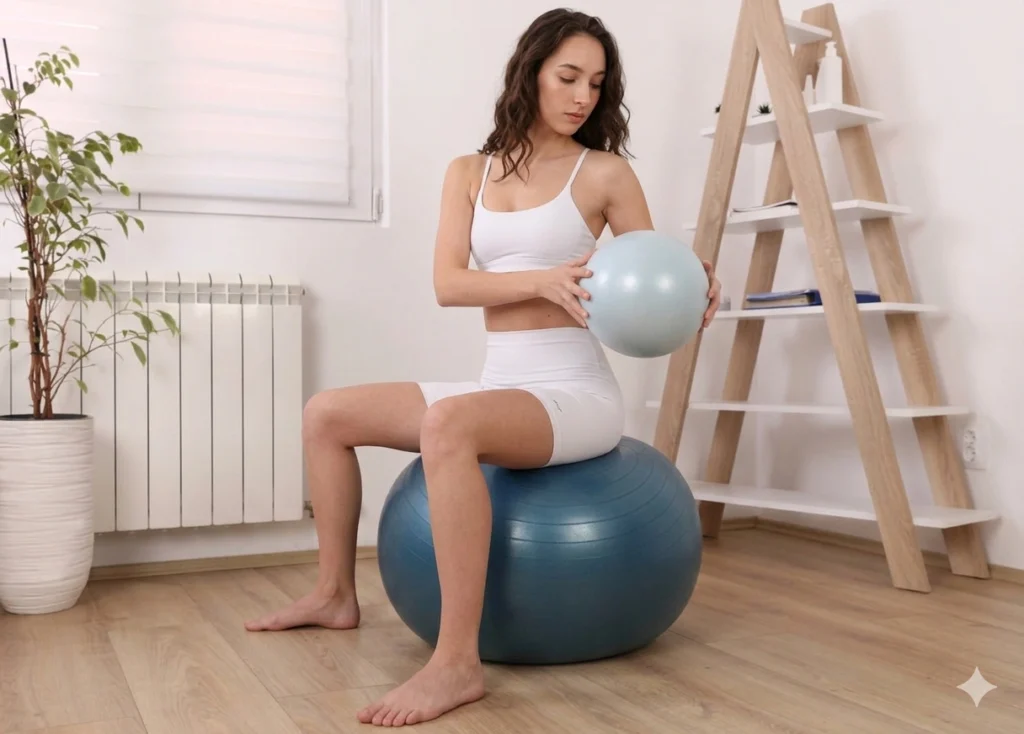
Gear: Use the EasyLean.fit Anti-Burst Donut Swiss Ball. Its stable, ring-shaped design is much safer than traditional round yoga balls, providing perfect support for the pregnant pelvis.
Method: Sit on the donut ball with hands on your knees or extended. As you exhale, tilt the pelvis backward and tuck the tailbone; as you inhale, return to neutral. Feel the deep stretch and relaxation in the pelvic floor and lower back.
To execute these pelvic floor exercises effectively, focus on deep diaphragmatic breathing. Inhale deeply to let your belly and pelvic floor muscles relax completely, expansion is just as important as contraction. As you exhale gently, imagine lifting your pelvic floor upward and inward, as if you are trying to stop the flow of urine. Hold the contraction for 3 to 5 seconds before releasing. Repeat this sequence for 10 to 12 repetitions per set, aiming for 2 full sets daily to achieve optimal muscle rehabilitation.
🐣 Stage 2: The Fourth Trimester (Early Postpartum / Weeks 1-6)
“Focus on non-invasive awakening to promote blood circulation and neurological connection—not high-intensity performance.”
According to the American College of Obstetricians and Gynecologists (ACOG), low-intensity pelvic floor and core recovery can begin just days after a healthy natural delivery if you feel well. This is a period for recovery, not performance. Avoid immediate crunches, burpees, or running, as these significantly increase the risk of pelvic organ prolapse and Diastasis Recti.
- Quick Flicks (Fast-Twitch Training): Quickly contract the pelvic floor (like stopping gas or urine flow) and relax immediately. Do 10 reps daily to help prevent leaking during coughs or laughter.
- Slow Holds (Slow-Twitch Training): Inhale deeply to expand the ribs; exhale slowly while lifting the pelvic floor upward. Try to hold for 5 seconds, then relax completely for 5 seconds.
🏋️ Stage 3: Deep Rehabilitation (Week 6 and Beyond)
After passing your 6-week doctor’s check-up, it is time for Progressive Resistance Training. Resistance training not only activates the transverse abdominis to tighten the belly but also balances hormones, boosts bone density, and alleviates the chronic back pain associated with childcare.
| Recommended Exercise | Equipment | Benefit |
| Pilates Ring Squeezes | Pilates Ring | Lie on your back with knees bent. Squeeze the ring between your knees while lifting the pelvic floor to stabilize the pelvis and pubic area. |
| Leg Slides | None (Floor) | Lie flat and keep the pelvis perfectly still. Slide one leg straight while inhaling and pull back while exhaling to safely reactivate deep core muscles. |
PregnancyWellness #PelvicFloorExercise #PostpartumRecovery #EasyLeanFit #DonutSwissBall #HomePilates #PostpartumRehab #ResistanceTrainingForWomen
💡 Medical Disclaimer
The health and exercise information provided in this post is for informational and educational purposes only and does not constitute personalized medical diagnosis, clinical advice, or treatment plans. Always consult your OB-GYN or a professional pelvic floor physical therapist before starting any exercise during or after pregnancy to ensure it is safe for your body.


Leave a Comment
You must be logged in to post a comment.